- De
- En

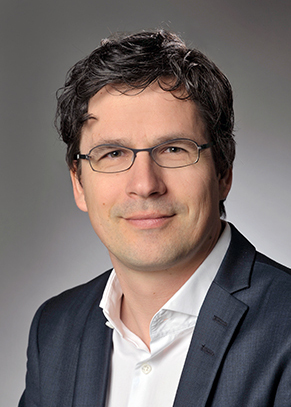 Prof. Dr.Philipp Wieder
Professor Dr. Philipp Wieder ist seit Oktober 2011 stellvertretender Leiter der GWDG, einer gemeinsamen Einrichtung der Georg-August-Universität Göttingen und der Max-Planck-Gesellschaft. Zudem leitet er die Arbeitsgruppe „eScience” und hatte von 2019 - 2025 eine Honorarprofessur an der Georg-August-Universität Göttingen inne. Seit 2025 ist er dort ordentlicher Professor für Data Science Infrastructures.
Im Jahr 2000 schloss er sein Studium als Elektroingenieur an der RWTH Aachen ab. Anschließend widmete er sich der Forschung im Bereich Distributed Systems and Grid Computing am heutigen Jülich Supercomputing Centre und promovierte zum Thema Scheduling in verteilten Infrastrukturen an der TU Dortmund. Parallel dazu war er als Gruppenleiter für die Arbeitsgruppe „Service Computing” an der TU Dortmund zuständig.
Philipp Wieder ist in verschiedene Initiativen zu Themen wie Forschungsdatenmanagement und verteilte Service-Infrastrukturen involviert. Neben der European Open Science Cloud ist das insbesondere die Nationale Forschungsdateninfrastruktur (NFDI), wo er Co-Sprecher des Konsortiums Text+ ist. Zudem verantwortet er zahlreiche nationalen und internationalen Forschungsprojekten und lehrt im Bereich Data Science.
| Thema | Professor*in | Typ |
|---|---|---|
| Metadata quality dashboard for the Deutsche Digitale Bibliothek | Prof. Ramin Yahyapour | BSc, MSc |
| SSO Keycloak integration and self-services for a community portal | Prof. Ramin Yahyapour | BSc, MSc |
| Knowledge Graphs and NLP techniques | Prof. Ramin Yahyapour | BSc, MSc |
| Implementation of an API specification to enhance the functionality of an Text- and Datamining system | Prof. Ramin Yahyapour | BSc, MSc |
| Token Management for an API to utilise HPC resources in generic workflows | Prof. Ramin Yahyapour | BSc, MSc |
| Trustworthy AI: Continuous Governance for LLM Services | Prof. Julian Kunkel | BSc, MSc |
| Exploring Quantum Computing Use Cases | Prof. Julian Kunkel | BSc, MSc |
| AI-assisted language learning | Prof. Julian Kunkel | BSc, MSc |
| AI-assisted programming learning | Prof. Julian Kunkel | BSc, MSc |
| Performance Evaluation of LLM Inference Engines | Prof. Julian Kunkel | BSc, MSc |
| Operating Kubernetes with AI Engineers | Prof. Julian Kunkel | BSc, MSc |
| Enabling Automatic Context Switching for Personal AI Assistants | Prof. Julian Kunkel | BSc, MSc |
| Comparison of Distributed Computing Frameworks | Prof. Julian Kunkel | BSc, MSc |
| Speculative KV Caches for Efficient LLM Inference | Prof. Julian Kunkel | BSc, MSc |
| Adaptive Attention Budgeting for Efficient Large Language Model Inference | Prof. Julian Kunkel | BSc, MSc |
| Automatic Prompt Classification for Intelligent Language Model Routing | Prof. Julian Kunkel | BSc, MSc |
| Graph Transformer Architectures for Workflow Scheduling: Beyond Standard GNNs | Prof. Julian Kunkel | BSc, MSc |
| Carbon-Aware Multi-Objective Scheduling for HPC Workflows Using Reinforcement Learning | Prof. Julian Kunkel | BSc, MSc |
| Transfer Learning Evaluation of GNN-RL Schedulers Across Workflow Families | Prof. Julian Kunkel | BSc, MSc |
| Online Adaptive Scheduling with Continual Reinforcement Learning for Shifting HPC Workloads | Prof. Julian Kunkel | BSc, MSc |
| Knowledge Graph Modeling of HPC Resources and Workflow Dependencies | Prof. Julian Kunkel | BSc, MSc |
| Monitoring and Controlling Irregular Behavior in Agentic AI Systems with Access to Digital and Physical Resources | Prof. Julian Kunkel | BSc, MSc |
| Environmental Sustainability Labeling for AI Services Based on Energy, Runtime, and Resource Usage | Prof. Julian Kunkel | BSc, MSc |
| Meta Machine Intelligence for Adaptive Error Detection in High-Performance Computing Systems | Prof. Julian Kunkel | BSc, MSc |
| Lightweight Edge AI for Detecting Irregular Behavior in Device and Sensor Logs | Prof. Julian Kunkel | BSc, MSc |
| Benchmarking AI Models for Resource-Aware System Monitoring | Prof. Julian Kunkel | BSc, MSc |
| Development of new applications for the SpiNNaker-2 neuromorphic computing platform | Prof. Julian Kunkel | BSc, MSc |
| Federated Learning from Private LLM-Agent Trajectories for Adaptive Agent Control | Prof. Julian Kunkel | BSc, MSc |
| FedToolAgent: Privacy-Preserving Federated Learning of Tool-Use Policies for LLM Agents | Prof. Julian Kunkel | BSc, MSc |
| FedCollab: Federated Optimization of Collaboration Protocols in LLM-Based Multi-Agent Systems | Prof. Julian Kunkel | BSc, MSc |
| FedAgenticRAG: Privacy-Preserving Multi-Agent Reasoning over Distributed Knowledge Bases | Prof. Julian Kunkel | BSc, MSc |
| FedGuardAgent: Federated Safety Policy Learning for Autonomous LLM Agents | Prof. Julian Kunkel | BSc, MSc |
| FedMARL-Agent: Federated Multi-Agent Reinforcement Learning for Privacy-Preserving LLM Agent Coordination | Prof. Julian Kunkel | BSc, MSc |
| Containerized Edge AI: Deploying AI Services with Lightweight Kubernetes | Prof. Julian Kunkel | BSc, MSc |
| Deployment and Evaluation of Lightweight AI Models on Edge and Embedded Systems | Prof. Julian Kunkel | BSc, MSc |
| Implementation of a precice-Adapter for the particle transport simulator LIGGGHTS | Prof. Julian Kunkel | BSc, MSc |
| Framework for automated ML and empirical model generation | Prof. Julian Kunkel | BSc, MSc |
| Checkpoint Integrity Verification in Distributed ML Training | Prof. Julian Kunkel | BSc, MSc |
| eBPF-Based Runtime Fault Injection Framework for HPC Workloads | Prof. Julian Kunkel | BSc, MSc |
| LLM Poisoning Detection via Training Data Attribution | Prof. Julian Kunkel | BSc, MSc |
| Development of Text-to-SQL/XML Conversational AI for Planarian Research Database | Prof. Julian Kunkel | BSc, MSc |